

Dearest Aspiring Authors: Negative Reviews Are Nothing to Fear
Advice from a traditionally published author

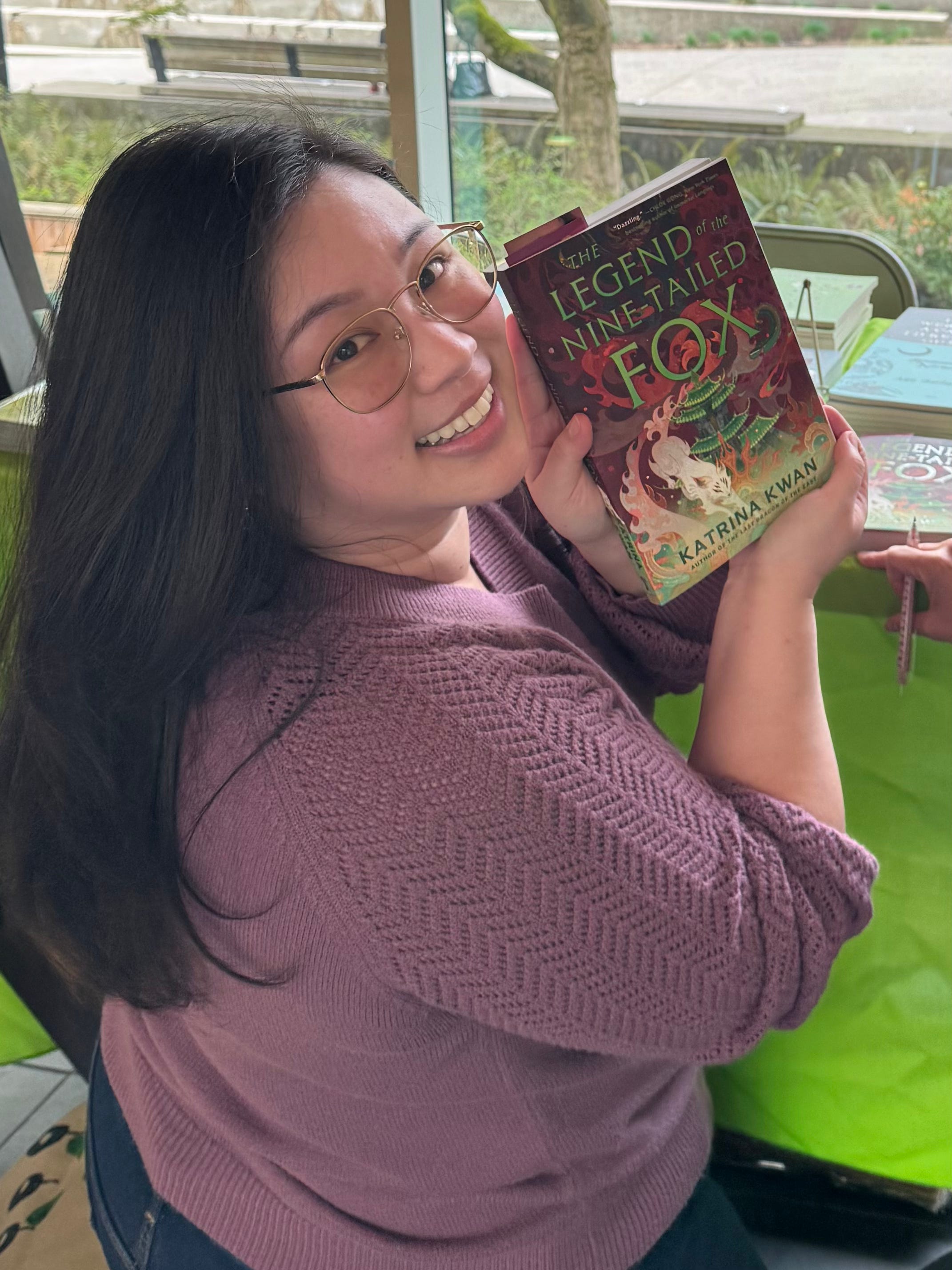
If you’re an aspiring author, you’re inevitably going to find yourself staring—wide-eyed and dismayed—at a lone star as it clocks you with a mean left hook that knocks the air from your lungs and spikes your heart into the pit of your stomach.
It’s going to happen. It has to happen.
And it’s okay.
First and foremost, you really shouldn’t be anywhere near book review platforms. It’s an adage that’s repeated over and over again: authors don’t belong in reader spaces. I now avoid Goodreads like the plague. (I call it the “shadowy place” and have a trusted friend pick out a few nice ones to read to me from time to time.)
But I get it, too. You’ve worked really hard on your book and it’s out in the world (or about to be), and you want to know how people will respond to your art. It’s only natural. When I was a starry-eyed debut, I, too, ventured into the shadowy place (or onto NetGalley to see what early reviewers were thinking) because curiosity had its hooks in me and refused to let go. (I got over it verrryyyy quickly.)
The good news is that some people are going to love it. They’ll laud your book as the best thing they’ve ever read. That it was so much fun, that they’re going to tell all of their friends to grab a copy. Music to every writer’s ears.
And then there are … *shudder* the others.
Some readers are going to hate your work—and BOY HOWDY they’re frightfully good at letting you know.
But, to repeat, it’s okay. Here’s why:
1. Negative reviews help you find the right readers.
I once had someone give my debut fantasy, The Last Dragon of the East, a 1-star review because in the opening chapter of the book, the main character, Sai, is said to have helped someone’s “cousin find his husband not two moons ago.” (He can see red threads of fate which, in Chinese mythology, connects soulmates to one another.)
The reviewer apparently “DNF’d because of the LGBTQ+ agenda.”
I wasn’t upset. In fact, I’m pretty sure I laughed!
I’m actually thankful for this review because I don’t want bigots to be anywhere near me or to get their grubby hands on my work. I want to reach readers who uplift those who have been historically marginalized and underrepresented. My ideal readers are the ones who walk into stories with open minds and empathetic hearts. The way I see it, this awful review will serve as a lighthouse to other like-minded (and horrible) individuals and warns them away!
Negative reviews keep the wrong audience from finding your book and might even attract the right one. I have faith that people are capable of thinking critically and for themselves (despite ChatGPT’s best efforts to rot our brains). There might be something Reviewer #1 disagrees with that Reviewer #2 might genuinely find interesting, prompting them to pick up your book to give a chance for themselves.
Of course, it doesn’t feel good in the moment. You’re allowed to feel the sting. It’s especially awful when a negative review gets a lot of likes or additional comments agreeing with their take, but I want to assure you that it isn’t as big of a deal as you might think. These people who flock to the echo chamber of Reviewer #1’s sentiments without having read the book themselves probably weren’t going to buy a copy anyway. And if they do, isn’t that more money in your pocket?
A win-win, if you ask me.
2. Negative reviews make your book legitimate.
In this day and age of bots and pay-to-win schemes, you not only want negative reviews, but need negative reviews.
Let’s stop thinking about books for a second. Instead, we’ll turn our attention—begrudgingly—to Amazon.
I need to buy a new toaster, and the first listing has a hundred reviews. Great!
They’re all five stars without a single detracting comment. Less great. Suspicious, even.
At my wizened age of 31, I’ve learned that if something is too good to be true, it usually is. (That, and if something is free, you’re the product. Tune in next week for my myriad of fortune cookie proverbs.)
I would much rather buy a toaster with 100 reviews, where—let’s say—80% are positive, 15% are middling and 5% are negative. I trust those reviews to be real. I trust the distribution curve.
The same logic works for books, as well. In a world where the more dishonest of us create sock accounts to bolster their own ratings (and in some more egregious cases, review bomb peers), sometimes an honest negative review can go a long way in terms of legitimizing your work.
It’s something to celebrate. You’ve done it! You’ve become big enough to have at least one hater! It’s a sign that you’re moving up in the world. As your circle of success begins to grow, it’s only natural that it will rub up against those that have no place within it.
3. Publishing vs. Writing
“Publishing is a business, writing is an art.”
I don’t know who to attribute this quote to. It’s not mine, but it’s something I frequently repeat to myself. We’re creatives. We’re precious with our work because we care so so so much.
But the hard truth is the moment you sign on that dotted line and land your first deal, you officially don two hats: that of the author, and that of the business person.
My advice to you is to separate the value you have of yourself from the value you have of your project. Critiques (and unjustified takedowns) of your book will feel really personal when you first begin as an author. Makes sense. You’ve likely spent many years writing and refining, so it’s difficult not to take a harsh review as a personal attack.
I promise it’s not.
Writing is a craft. You only get better with time. Your writing will improve after every single new story you complete. That is what you can control. That is where you should focus your time and attention.
Looking back at my old books, I sometimes find myself agreeing with negative or mixed reviews. I agree the writing could have been better or didn’t make sense or was clunky. I was young back then. Inexperienced. (Still am, I might argue.) I often tell people at book events that if I ever got the chance to rewrite any of my books, there are a thousand little things that I would do differently knowing what I do now.
But I can’t. Because the book is already out and at some point, you have to let your work stand on its own two legs. Be proud of what you’ve achieved, but now that it’s out in the world, it is a product. And products, like all things in the ceaseless machine of capitalism, is subject to scrutiny—both good and bad.
Detach your worth from the product. You are more than what you create.
4. Everyone is entitled to their opinions—even if you don’t agree.
Anyone who knows me will probably (hopefully) tell you that I’m a pretty chill dude. I’m very laissez-faire about many aspects of my life. Going with the flow and rolling with the punches has served me well over the years, which is why when I hear what I perceive to be a bad take, I’m not overly reactionary. I’m a big subscriber of the Let Them theory.
Let them have an opposing opinion. Let them not like my book. Let them tell everyone and their mother that my writing is trash and I never should have been published. Want to know why it doesn’t bother me?
Because arguing would be a waste of my time and energy. I’m over here, grateful for the life I’ve built in a writer’s space I’ve curated to make me feel comfy and cozy while working on a new passion project of mine. Meanwhile, they’re using their energy to write multi-paragraph essay review picking apart every single thing that they thought was wrong with my book. Cool! Go for it, babes. Honestly, all the more power to you! The fact that my story managed to illicit a reaction out of you is flattering.
If that’s still not enough to make you feel better, though, I encourage you to look up your favorite book on Goodreads. Go to the negative reviews, sort by most popular, give it thorough analysis. Maybe you’ll agree with some points, maybe you won’t.
Some people rate books on vibe, and that’s perfectly alright. Some people rate books on a scale that doesn’t quite align with our own, and that’s alright, too!
My point is, even your most beloved book is going to draw someone’s ire. That’s why I said getting a negative review is going to happen. It has to happen.
But honestly, who gives a fuck about perfection, anyway?
5. It’s not personal. (Usually.)
Here’s a thought exercise I want you to practice whenever you’re feeling some type of way about a 1-star: put yourself in the reviewer’s shoes.
We’ve all been there, I’m sure. I’ve personally picked up a book, read it halfway through and had to DNF. Why? Oh, gosh, I don’t know. Maybe I had a headache. Maybe this was a new author to me and I learned I didn’t jive with their style. Maybe I had a flat tire and I’ve just burned dinner and I missed the mortgage payment. In short, I’m in a bad mood and that effects my feelings/enjoyment of the book I’m reading.
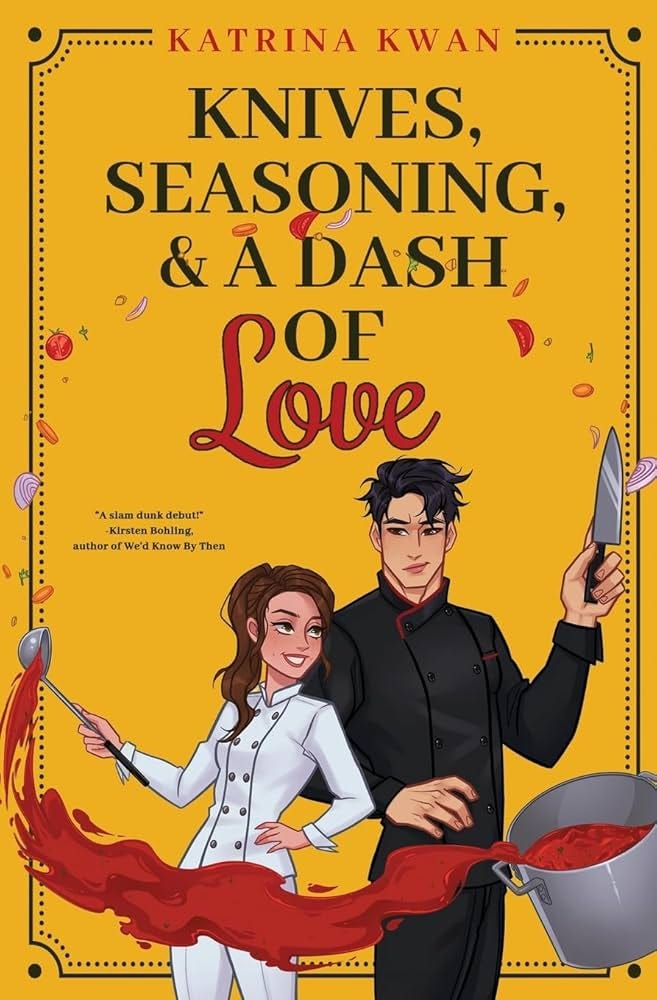
There’s also the possibility they just didn’t get it. I once read a 1-star review of Knives, Seasoning, and a Dash of Love where someone thought it was a murder mystery book based off it’s cover. (Reader, it was not, in fact, a murder mystery.)
Sometimes, you’ll come across readers who don’t give out fives out of principle. (I’ve had a handful of college professors who didn’t give A’s ever because “tHeRe’S aLwaYs rOoM fOr iMpRoVemEnt.”)
With enough time, you’ll likely come across readers who mostly give only ones and twos. It’s not personal, that’s just how they are. There’s the possibility that they’re troll accounts, which is only more of a reason to ignore what they have to say. There’s something almost comforting, in a way, that no author they’ve ever read has been able to meet their standards.
We can hang out in the lower ranks together.
But do you see? None of that was personal. No one is attacking your character, who you are as a human being. If they are, that’s an entirely different issue.
Your book ≠ you.
6. Sometimes the reviewer has a point.
Look. If you want to grow in this business, you have to take things in stride. I’ll be the first to confess that taking critique can be hard, but if you approach it with grace and good humor, I’ll guarantee you’ll be able to walk away with useful information.
Some people leave little substance and nothing actionable. “Sorry, but this was bad.” “DNF because of LGBTQ+ agenda.” “Booo boring.” “Barf.” “Yeah, no.”
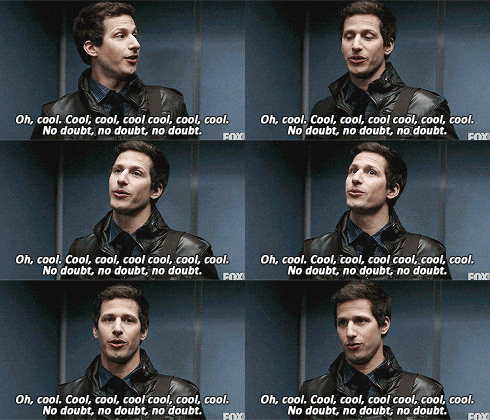
Cool, cool, cool, cool, cool, cool. Go off, queen. As is your right!
BUT.
If you really must read, then remember there are lessons to be learned. Are you, as a writer, seeing a common pattern? Do readers not enjoy your pacing, your world-building, your dialogue? Are there noted issues with character arcs and comments on plot holes that keep cropping up?
Use these to your advantage for your next project. There’s nothing that can be done for the book that’s already out there. You did your best, now you have no choice but to let it go.
But rest assured that authors are like fine wine. We get better with age. Identify weaknesses and develop your craft. It’s uncomfortable to come face-to-face with critique, but only the best of us use it as fuel to grow.
7. Remember what a badass you are.
Eleanor Roosevelt once said: “No one can make you feel inferior without your consent.” It’s a mantra that I live by.
The next time a negative review comes your way and you have a hard time processing, remind yourself of who you are.
You’re the one with a book deal. You’re the one working on your passion project, getting ready to query. You’re the one being brave and striving to achieve your dreams. You’re the one creating something new. You’re the one with the courage to put yourself out there.
Who are they? Some rando on the internet, probably hiding behind an online handle and a Picrew profile pic. They’re entitled to write whatever they want, and you’re allowed to feel however you want to feel because, as all authors are more than aware, words can hurt. But I encourage you not to allow yourself to become bogged down.
When someone cuts you off in traffic and flips you off, it sucks. Your initial reaction might be to get a little angry, to retaliate by giving them a big ol’ “fuck you, too.” It’s a very natural feeling to become defensive.
But don’t. Please, for the love of God, DON’T.
If you’ve been around online for a long time, you’ll know that nothing good ever happens to authors who react publicly. Trust. What you need to do instead is commiserate with a close friend, other authors in your writing group, kvetch to your diary! Responding to negativity is a zero-sum game, and I’ve seen one too many instances where aspiring or debut authors have burned themselves before they’ve even gotten their careers off the ground. (Sometimes established, authors, too! We’re only human.)
Remember, we’re business people now.
The momentary high of clapping back isn’t worth the longevity of your career.
Does Stephen King respond to hate comments? No. He’s busy writing.
You, my dearest writing friend, must keep writing, too.
I love this advice so much! It's very helpful for a debut author.❤️
I needed this!! Thank you! 🥲